
What’s New in Apple’s 2025 Lineup (iPhone 17 Family Overview)
Apple’s fall 2025 lineup introduces four main devices: the iPhone 17 (the new value-focused flagship), the ultra-thin iPhone Air (a new replacement for the old “Plus” model), and the more powerful iPhone 17 Pro and iPhone 17 Pro Max aimed at pro users. The company moved to make the base iPhone more capable — bringing ProMotion displays and upgraded cameras to the non-Pro model while reserving the most advanced materials, cooling, and camera systems for Pro models. Preorders opened September 12 and availability begins September 19 for most markets.
The Four Models: iPhone 17, iPhone Air, iPhone 17 Pro, iPhone 17 Pro Max
-
iPhone 17: 6.3-inch Super Retina XDR OLED, A19 chip, 48MP Dual Fusion rear cameras, 18MP front camera, Ceramic Shield 2 starts at $799. .
-
iPhone Air: Ultra-thin 6.5-inch model in titanium, A19 Pro chip, single 48MP camera (but pro-grade), thinner profile, starts at $999.
-
iPhone 17 Pro / Pro Max: Bigger displays (6.3″ / 6.9″), triple 48MP Pro Fusion cameras, upgraded cooling, extra software/video features, starting at $1,099 and $1,199 respectively.
Apple standardized the starting internal storage at 256GB across the new lineup (for most markets), which shifts the value conversation: the iPhone 17’s base price now gives you 256GB by default, making it a strong proposition for users who need storage but are price-sensitive. Preorders and availability followed Apple’s usual cadence preorder on Sept 12, in-store/ship on Sept 19 for initial markets.
Design & Build: What Changed (and what didn’t)
Size, weight and materials (Aluminum vs Titanium)
The iPhone 17 continues Apple’s design language but adjusts materials and dimensions across models for differentiation. The standard iPhone 17 retains an aluminum frame with a frosted glass back (like prior base models), while the iPhone Air uses polished titanium to hit an ultra-thin 5.6mm profile and lighter weight. The Pro models blend performance-oriented materials and reworked internal layouts to support better cooling. These choices mean you get a more premium handfeel with Air, a balanced build with the iPhone 17, and the thermally capable chassis of the Pro models.
Ceramic Shield 2: durability and practical benefits
Apple introduced Ceramic Shield 2 on the front of the iPhone 17 family, stating the new glass has a specialized Apple coating that is 3× more scratch resistant than previous generations, with some Pro models also featuring Ceramic Shield protection on the back for improved crack resistance. The practical upshot: fewer micro-scratches over time, better outdoor clarity with reduced reflections, and more confidence in daily handling though a case is still advisable for drops.
Colors and finishes — what to expect
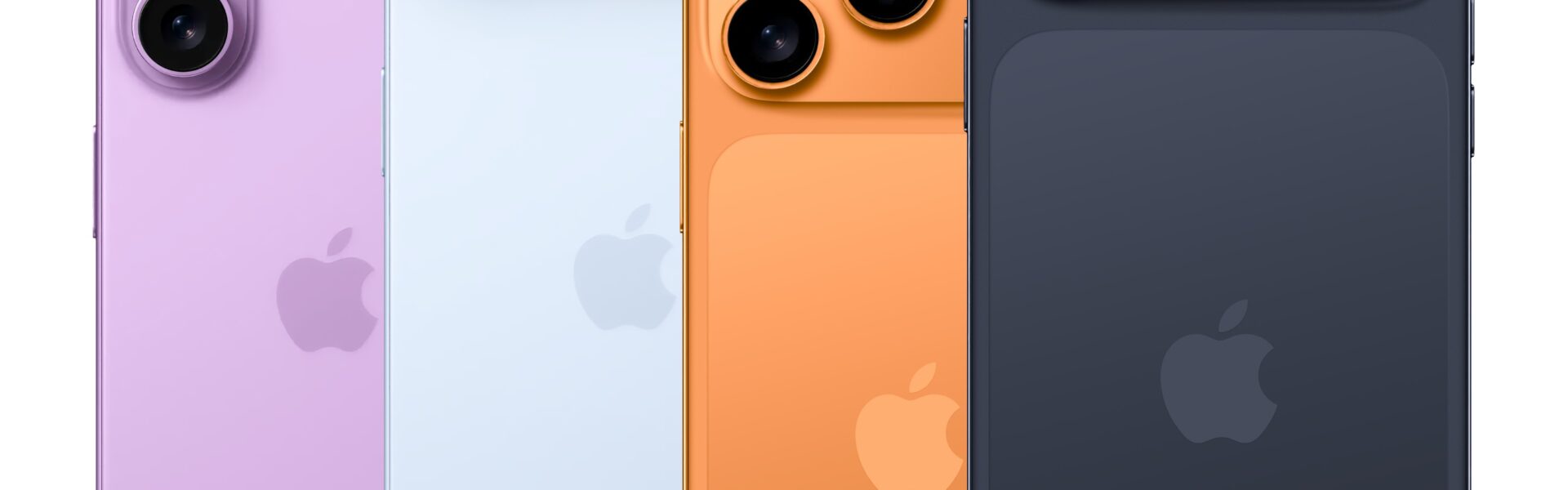
The iPhone 17 comes in five colors — Lavender, Mist Blue, Sage, Black, and White — a subtle and modern palette aimed at broad appeal. The Air and Pro models have their own finish options (Air leans into sky/metallic tones, Pro models into deeper finishes). If color is your personality, plan early certain finishes often sell out quickly in initial waves.
Display: Bigger, Brighter, Smoother
The 6.3-inch Super Retina XDR OLED (iPhone 17)
Apple bumped the base iPhone’s screen up to 6.3 inches (from 6.1), matching the iPhone 17 Pro’s diagonal. The panel is a Super Retina XDR OLED with a resolution that keeps pixel density high for crisp text and images. The slightly larger footprint comes with thinner bezels, so the phone feels noticeably more immersive without feeling bulky.
ProMotion up to 120Hz and Always-On display
For the first time, ProMotion 120Hz adaptive refresh made its way to the standard iPhone 17. That means smoother scrolling, lower touch latency, and more fluid UI animations. The display can scale down to low refresh rates for static content to save power (1Hz when appropriate), and it supports Always-On display functionality so glanceable information is readily available without waking the phone.
Peak brightness, outdoor visibility and real-world use
Apple claims a peak outdoor brightness of up to 3000 nits, a big jump over prior models and one of the brightest smartphone panels in the market. In practical terms, this translates to much improved visibility under direct sunlight photos look truer, and HDR content can pop even outdoors. Note: typical brightness and HDR peaks still sit lower (Apple lists typical 1000 nits and HDR up to 1600 nits), but the 3000-nit outdoor mode is for short, high-visibility bursts.
Cameras: Dual Fusion and Camera Control
The new 48MP Dual Fusion system — what it means
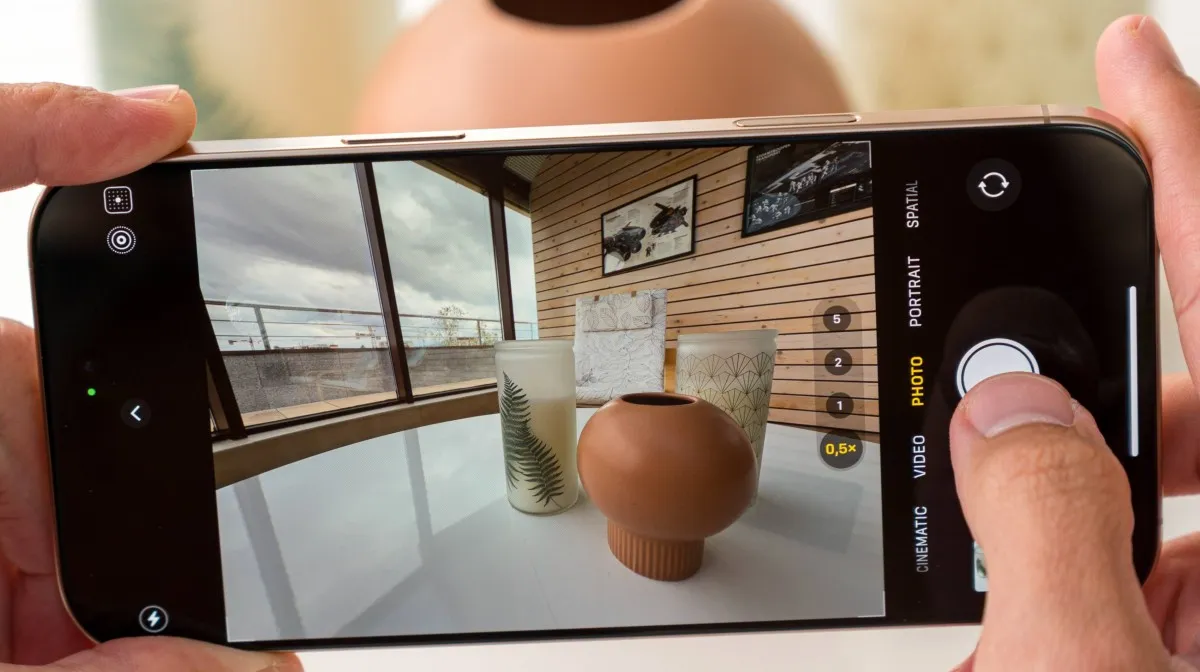
The iPhone 17 replaces older main camera sensors with a 48MP Dual Fusion system: a 48MP Fusion Main (wide) paired with a 48MP Fusion Ultra Wide. The Fusion approach combines multiple techniques (pixel binning, sensor-level fusion and smart ISP processing) to give you a 12MP or 48MP output depending on the mode you choose meaning excellent low-light performance and high-detail shots when you need to crop. Optical zoom options now include 0.5x, 1x, and 2x, enabled by the Fusion main lens’ 2x optical capability. This upgrade is a big step up from the old 12MP ultra wide and yields consistently better detail and dynamic range.
Front camera upgrades and Dual Capture video
Apple upgraded the front camera to an 18MP Center Stage camera with a larger square sensor that can shoot in both landscape and portrait orientations without rotating the phone. A huge creative addition is Dual Capture, which lets you simultaneously record 4K Dolby Vision video from front and back cameras perfect for reaction vids, interviews, or vlogging without needing multiple devices. Stabilization and improved low-light selfie performance round out the front camera improvements.
Action button, Camera Control and pro features
The Action button from previous generation iPhones returns, alongside a Camera Control shortcut that lets you instantly grab specific capture modes (portrait, video, ProRes, etc.) with minimal fumbling. On Pro models these controls unlock extra bitrate and professional video features, while on the iPhone 17 they give quick access to useful tools without steep learning curves.
Performance: A19, Neural Accelerators, and N1 Networking
A19 chip architecture and everyday performance
At the heart of the iPhone 17 sits Apple’s A19 chip, built on a third-generation 3nm process. Apple advertises gains in CPU and GPU speed, and the A19 includes a 5-core GPU with per-core Neural Accelerators that accelerate on-device generative AI tasks and graphics workloads. For everyday users, that means faster app launches, smoother gaming, and improved efficiency that helps battery life. Benchmarks will vary, but Apple positions A19 as a significant uplift over A18 in both single-threaded and multi-threaded tasks.
AI on-device: Neural Engine and generative tasks
The A19 package includes a beefed-up 16-core Neural Engine and hardware paths that Apple says will accelerate on-device AI tasks like image adjustments, Live Caption, Clean Up functions in Photos, and other “Apple Intelligence” features in iOS 26. The addition of Neural Accelerators into GPU cores also suggests better real-time graphics and potential for in-game generative behaviors. For creators and heavy multitaskers, the gains are tangible: faster rendering, smoother exporting, and lower latency for AI-driven features.
Connectivity: Qualcomm modem, Wi-Fi 7, Bluetooth 6, Thread
Apple combined a Qualcomm 5G modem for cellular connectivity with an N1 networking chip that aggregates Wi-Fi 7, Bluetooth 6, and Thread support, improving range, throughput, and low-latency local networks for smart home devices. Dual-frequency GPS and other location services remain, and Pro models add higher-end modem variants in some regions. For heavy cloud users or those on fast home networks, Wi-Fi 7 and the N1 chip promise more headroom for large media uploads and real-time multiplayer gaming.
Battery & Charging: Bigger endurance, faster top-ups
Real-world battery expectations (video, streaming, standby)
Apple lists the iPhone 17 battery as capable of up to 30 hours of video playback, which is a meaningful improvement over prior base models and should translate into all-day real-world use even for power users. Streaming hours will be slightly lower (Apple often distinguishes between local video playback and streaming). The combination of the A19’s efficiency and adaptive display scaling helps eke out longer uptime.
Fast charging, MagSafe, and adaptive power savings
Charging improved too: Apple claims the iPhone 17 can fast charge to 50% in ~20 minutes with a 40W+ USB-C adapter, and 50% in ~30 minutes with MagSafe. The device supports MagSafe and Qi2 charging at up to 25W. iOS 26 introduced an Adaptive Power mode which dynamically adjusts background activity and refresh rates based on your usage patterns to extend daily battery life. These changes reduce “range anxiety” for many users, though true charge times will depend on cable, adapter and real-world conditions.
Software & Apple Intelligence (iOS 26 features for iPhone 17)
Clean Up, Adaptive Power, and new camera software
iOS 26 brings noteworthy features that pair well with the iPhone 17’s hardware: Clean Up in Photos (intelligently suggests removal of duplicates and clutter), improved on-device generative assistance, and camera software refinements like next-generation portraits and enhanced low-light modes. Because Apple bundles more AI responsibilities onto the Neural Engine and GPU, many of these features will be faster and possible entirely on the device — improving privacy and lowering latency.
Long-term software support and resale value
Apple’s historical 5–7 years of major iOS updates continues to be one of the company’s strongest selling points. Given the A19’s modern architecture and Apple’s software commitment, expect the iPhone 17 to remain supported for many years, which keeps resale values higher compared with many Android alternatives.
iPhone 17 vs iPhone 16 — Is it worth upgrading?
Head-to-head spec comparison
In plain terms, the jump from iPhone 16 to iPhone 17 includes:
-
Larger base display (6.1″ → 6.3″), ProMotion 120Hz introduced on base model.
-
Big camera uplift from a 12MP ultra wide to a 48MP Dual Fusion system on the base model.
-
New A19 chip vs A18, with improved GPU/Neural performance.
-
Ceramic Shield 2 and much higher peak outdoor brightness (up to 3000 nits).
-
Battery life gains (several hours depending on use).
If you have an iPhone 14 or older, the iPhone 17 represents a major upgrade. If you’re on an iPhone 16 especially the Pro models the decision hinges on how much you value the camera improvements and the larger brighter display.
Who should upgrade now vs wait
-
Upgrade now: Users on iPhone 13 or older, photographers who want better ultra-wide/zoom options, and people who want a modern ProMotion display and improved battery life.
-
Wait: Owners of very recent iPhones (iPhone 16 Pro/Pro Max with A18 Pro or similar) might prefer watching for the iPhone 18 cycle (rumored under-display Face ID and variable aperture) unless they need the immediate camera/display bumps.
iPhone 17 vs iPhone Air vs iPhone 17 Pro — Which one fits you?
When to pick iPhone 17 (value balanced)
Pick the iPhone 17 if you want a full flagship experience without paying Pro prices: great camera upgrades, 120Hz display, A19 performance, robust battery life, and a $799 entry price that includes 256GB, a compelling “sweet spot” for most buyers.
When to pick iPhone Air (ultra-thin design & pros inside)
Choose the iPhone Air ($999+) if you prioritize design (5.6mm thin titanium shell), want pro-level chip performance in a slim package, and don’t need multi-camera telephoto hardware. It’s aimed at people who want a fashionably thin handset but still demand top performance.
When to pick Pro or Pro Max (creatives and prosumers)
Pick iPhone 17 Pro / Pro Max if you are a photo/video pro or content creator who will actually use advanced ProRes workflows, vapor chamber cooling for long renders, or higher storage tiers (up to 2TB). The plateau camera system and extra thermal headroom justify the higher price for some users.
Accessories & Ecosystem: MagSafe, cases, chargers and more
Best cases for the iPhone 17 and how Ceramic Shield 2 changes case choices
Ceramic Shield 2 improves scratch resistance but won’t eliminate drop damage. For most users a slim bumper or clear case highlights the color while protecting edges. If you’re clumsy, a rugged drop case is still recommended, the improved glass simply reduces the chance of micro-abrasions and light scratches over time.
Chargers and cables — what to buy for best charging
For fastest wired charging, pair the iPhone 17 with a 40W+ USB-C PD adapter. For wireless, use Apple’s MagSafe ecosystem or Qi2 chargers that support the higher MagSafe wireless rates. Investing in a USB-C PD charger that supports USB-PD PPS and good quality braided cables will give you the best day-to-day experience.
Privacy, Safety & eSIM-first rollout
eSIM availability and carrier readiness
Apple continues to push eSIM in many markets; the iPhone 17 lineup supports eSIM-first configurations in the U.S. and several other countries. If you travel internationally frequently, confirm carrier support many major carriers already support eSIM, but availability varies by region. eSIM can simplify multi-carrier setups and keeps the SIM slot out of the design, enabling slimmer builds.
Emergency SOS via Satellite, Crash Detection and privacy features
Safety features remain a highlight: Emergency SOS via satellite, Crash Detection, improved privacy controls, and on-device processing for Apple Intelligence features mean many sensitive actions happen on your phone rather than in the cloud. For users who value privacy, this is a notable advantage.
Future roadmap: iPhone 18, Foldables and what to expect in 2026–2027
Rumored under-display Face ID & variable aperture cameras
Apple’s roadmap suggests bigger changes ahead: rumors point to under-display Face ID in iPhone 18 Pro models, which could shrink the Dynamic Island to a single hole-punch or eliminate it, and variable aperture camera tech coming to Pro models, offering DSLR-like control over light and depth of field. These are likely 2026–2027 developments and could be compelling for pro photographers.
The foldable iPhone timeline and what it may mean for buyers
A foldable iPhone is rumored for fall 2026. Apple insiders suggest a “book fold” design with a near-invisible crease and premium hinge engineering. If you’re patiently waiting for entirely new form factors rather than generational improvements, 2026 could be a year to watch but early foldables often carry a price premium and experimental tradeoffs.
Read Also iPhone 16 Pro Max or iPhone 17 Pro Max: Brutally Honest Comparison Before You Buy
FAQs — Quick answers to common questions
Q: What is the starting price of the iPhone 17?
A: The iPhone 17 starts at $799 in the U.S. with 256GB as the base storage.
Q: When were preorders and sales?
A: Preorders began on September 12 and initial availability began September 19 in many markets.
Q: Is Ceramic Shield 2 worth it?
A: Yes — Ceramic Shield 2 improves scratch resistance (Apple claims 3× better scratch resistance on the front) and improves anti-reflection; it’s a clear material upgrade for everyday durability.
Q: Does the iPhone 17 have USB-C?
A: Yes — Apple moved to USB-C across the lineup, and the iPhone 17 includes a USB-C port (transfer speeds vary by model, Pro models may support faster USB-3 speeds).
Q: Should I buy the iPhone 17 or wait for iPhone 18?
A: If you want improved cameras, bigger display, ProMotion and better battery now — buy iPhone 17. If you want rumored future tech like under-display Face ID or variable aperture (likely 2026), waiting could make sense — but that’s for early adopters.
Final verdict: Who should buy the iPhone 17 in 2025?
The iPhone 17 is Apple’s pragmatic flagship, it brings many Pro features down to the mainstream model while keeping a consumer-friendly price point. If you want a phone that will feel modern for years, has a class-leading display, a huge jump in camera capability, strong battery life, and robust on-device AI potential without paying Pro prices, the iPhone 17 is the best buy in Apple’s 2025 lineup for most people. Creators who need the absolute top tier of camera and video performance should still look at the Pro models; design lovers who want the thinnest possible phone should consider the iPhone Air. For everyone else: iPhone 17 gives the best balance of price and performance.